
CIO Applications Europe
About UsConferencePartner With Us
Close
  • Applications
      • Business Intelligence & Analytics
      • Call Center Solutions
      • CRM & Customer Experience
      • Data Center
      • Digital Transformation
      • E-Invoicing
      • Intelligent ERP & Automation
      • Risk Management & Compliance
      • Unified Communications (UCaaS)
  • Industries
      • Automotive & Mobility
      • Construction & Infrastructure
      • Financial Services
      • Healthcare
      • Retail & E-commerce
      • Telecom & Media
      • Travel and Hospitality Tech
  • Technologies
      • Cloud
      • Cybersecurity & Resilience
      • Data Engineering & Analytics
      • Generative and Agentic AI
      • IoT & Edge Computing
      • Robotics
  • Platforms
      • AWS
      • IBM
      • Microsoft
      • Salesforce
      • SAP
      • ServiceNow
  • Leadership Perspectives
  • Innovation Insights
  • Research
  • News
  • CXO Awards
    • Europe
      • US
  • Topics

  • Menu
      • Business Intelligence & Analytics
      • Cloud
      • Digital Transformation
      • Generative and Agentic AI
      • Microsoft
      • Risk Management & Compliance
      • Travel and Hospitality Tech
      • Unified Communications (UCaaS)
  • Microsoft
  • Risk Management & Compliance
  • Travel and Hospitality Tech
  • Generative and Agentic AI
  • Digital Transformation
  • Business Intelligence & Analytics
  • Cloud
Topics
  • Topics

  • Business Intelligence & Analytics
  • Cloud
  • Digital Transformation
  • Generative and Agentic AI
  • Microsoft
  • Risk Management & Compliance
  • Travel and Hospitality Tech
  • Unified Communications (UCaaS)
  • Home
  • IoT & Edge Computing

A featured contribution from Leadership Perspectives: a curated forum reserved for leaders nominated by our subscribers and vetted by the Construction Tech Review Advisory Board.

REALM IDx

Jonathan Usuka, Ph.D., Chief Strategy & Informatics Officer

Transformational impact on our understanding of disease
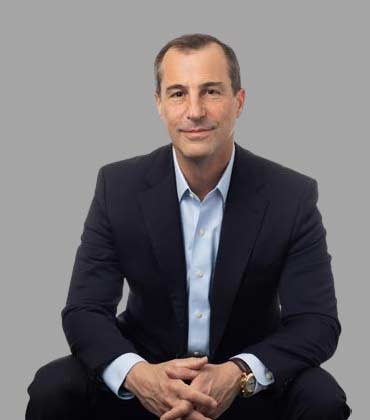
I believe that patient data and the computational power of cloud computing are having a transformational impact on our understanding of disease. When I was at Stanford in the 1990s, computational power and algorithms were starting to take off. At the same time, the human genome project was producing high volumes of data, offering new insights with the availability of DNA sequences. This was the first time that we had the software to process this type of data. I quickly learned that having significant impact in health care would be driven by data, and I took those learnings with me to discover and develop new oncology therapies across 15 years at Roche, Genentech and Celgene BMS.

During the next chapter of my career journey, I led pharmaceutical analytics at McKinsey, helping companies develop and use real-world data assets. At the time, we had electronic medical records and claims data, but my clients consistently had a data gap, needing deeper scientific information like biomarkers and pathology images to understand and predict a patient’s response to therapy.

I believe that this data gap is best addressed by organizations that produce high quality lab data, such as diagnostic companies and academic medical centers.

Today the health care field is good at gathering singe types of data in silos to diagnose and treat patients, but how will we address the persistent unmet medical need in complex diseases like cancer, Alzheimer’s and rare disease?

I came to REALM IDx to answer that question. We are working to combine different types of data, like radiology, genomics and pathology, and applying machine learning (ML) and artificial intelligence (AI), to find new insights about disease.

These insights would not be possible by working only with one data type. This is the future of health care and my career path has brought me to this point at the intersection of science, genetic data, imaging, pathology and computational power.

Previous efforts fell short because they lacked the ability to combine multiple data sources. Moving forward, we need disease specific datasets from multiple sources. For example, REALM IDx is partnering with PRECEDE, a collaboration of pancreatic researchers at leading academic medical centers, with the goal of improving the survival rate of pancreatic cancer patients. REALM IDx plans to use its integrated diagnostic approach focused on machine learning, genetic testing and imaging to determine who is at an elevated risk for developing pancreatic cancer to optimize treatments.

As information enabled health care continues to evolve, I have three recommendations to share. First, remember that we live and die by the quality of data. It’s not about having more data, it’s about having better data. Second, analyze data from multiple sources in an integrated way. Focusing on disease specific, multi-modal data will drive future insights. Finally, unleash the power of artificial intelligence and machine learning but remember that it needs to be interpreted and understood before it will directly impact physician decisions. Computers and algorithms can make observations that are true, but clinicians are critical for developing models that explain disease.

By integrating high quality patient data across genomics, pathology, and radiology, and combining those with longitudinal data from a patient’s medical record, I believe that we will pioneer the digital diagnosis of disease.

The articles from these contributors are based on their personal expertise and viewpoints, and do not necessarily reflect the opinions of their employers or affiliated organizations.
The Leadership Perspectives forum brings together voices shaping construction technology and innovation. Participation is by invitation only. It features leaders who are not merely observing technological change, but actively contributing to it through digital transformation and execution-driven insights.
EDITOR'S CHOICE
  • Willis Towers Watson

    Legal & General

    Building Technology Foundations That Last

    Mark Hall, Group Chief Technology Officer

  • Willis Towers Watson

    Adp Uk

    "Shift left" Defect Discovery using Agile and DevOps

    Keith Watson, Director Of Devops

  • Willis Towers Watson

    Motor Oil

    Trust, Security Strategy and the AI-Driven Threat Landscape

    Syngelakis J. Christos, Group Data Protection Officer

  • Willis Towers Watson

    Swiss Re [SWX: SREN]

    A Future of Enhanced Human Work

    Sergio Chelli, IT Procurement Manager at Swiss Re [SWX: SREN]

Weekly Brief

loading

I agree We use cookies on this website to enhance your user experience. By clicking any link on this page you are giving your consent for us to set cookies. More info

×
#

CIO Applications Europe Weekly Brief

Be first to read the latest tech news, Industry Leader's Insights, and CIO interviews of medium and large enterprises exclusively from CIO Applications Europe

Subscribe

loading

THANK YOU FOR SUBSCRIBING

CIO Applications Europe
Follow on LinkedIn

About

  • Home
  • About Us
  • Partner With Us

Stay Connected

  • Subscribe
  • Newsletter
  • Sitemap

Contact Us

  • editor@cioapplicationseurope.com
  • sales@cioapplicationseurope.com
  • marketing@cioapplicationseurope.com

Legal

  • Editorial Policy
  • Privacy Policy
  • Terms of Use

© 2026 CIO Applications Europe. All rights reserved. Headquarteblue in Fort Lauderdale, FL, USA.

This content is copyright protected

However, if you would like to share the information in this article, you may use the link below:

https://iot-and-edge-computing.cioapplicationseurope.com/leadership-perspective/transformational-impact-on-our-understanding-of-disease-nid-3112.html